The €47 Billion Problem
Every construction project in the world begins with the exact same fundamental challenge: taking a massive stack of architectural and engineering drawings and mathematically translating them into material quantities, structural weight, and ultimately, a highly accurate cost estimate.
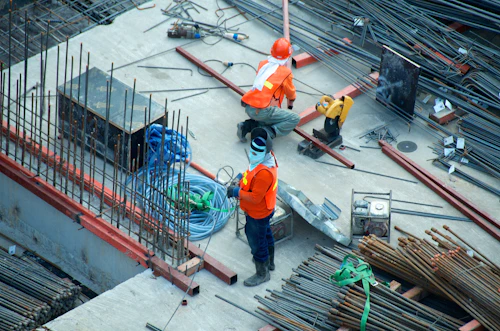
This process—known as "takeoff" or estimation—is the lifeblood of the Architecture, Engineering, and Construction (AEC) industry. It is also an incredibly fragile, manual bottleneck. A senior estimator at a commercial firm might spend 40 to 80 hours locked in a room doing nothing but counting steel columns, tracing electrical runs, and measuring concrete slab areas.
When human fatigue inevitably sets in during hour 40, errors occur. Globally, the AEC industry loses an estimated €47 billion annually to estimation errors, underbidding, and the subsequent rework required to fix those mistakes. Root & Logic engineers intelligent automation specifically designed to eliminate this risk entirely.
The Takeoff Bottleneck (Problem Breakdown)
The sheer volume of data in modern construction makes manual estimation statistically dangerous.
The Reality of Manual Work:
- A standard mid-size commercial project often contains upwards of 750 pages of highly detailed blueprints.
- A human estimator must physically touch or manually click every single element on every single page to ensure accurate material counts.
- Because the process is so slow, contractors are forced to turn down bidding opportunities simply because they lack the human bandwidth to generate the quote in time.
| Project Size | Total Pages | Manual Hours Required | Calendar Days Lost |
|---|---|---|---|
| Small commercial | 350 | 14-23 hours | 2-3 days |
| Medium commercial | 750 | 30-50 hours | 4-6 days |
| Large commercial | 1,500+ | 60-100+ hours | 8-12+ days |
When you are forced to spend two weeks just figuring out how much the materials will cost, your competitors who estimate faster have already won the client.
The Root Causes: Why Estimators Struggle
Why is this process still so incredibly painful despite the existence of "digital" takeoff software?
1. "Digital" Just Means "Digital Tracing"
Most modern takeoff software didn't actually automate the work; it just moved the work from physical paper to a computer monitor. Estimators no longer use highlighters and scale rulers; they use a mouse to click and drag over PDFs. It is slightly faster, but the core cognitive load—the human counting and measuring—remains exactly the same.
2. The Disconnect Between Sight and Math
As detailed in our analysis of Hybrid Symbol Recognition, standard computer vision models fail in construction because they treat blueprints like photographs. An estimator doesn't just "see" a line on a page; they apply a complex formula based on the drawing's stated scale, the material density, and local building codes. If an AI system cannot do the underlying math, it is useless to an estimator.
3. Fragmented Symbol Libraries
Every architectural firm draws their structural steel or HVAC ducting slightly differently. An AI model trained only on "Standard Set A" will completely fail when it encounters "Standard Set B."
Practical Solutions: The Worker Swarm Architecture
To solve this, Root & Logic abandons linear processing entirely. You cannot teach a single AI model to read a 500-page blueprint in one sitting. Instead, we utilize a Worker Swarm, a core application of our 4-Layer Agent Architecture.
How the Swarm Operates
When a massive PDF document set is uploaded, the system does not read it from page 1 to page 500. Instead:
- 1The Orchestrator: A central agent analyzes the document set and divides it into 500 individual tasks (one for each page).
- 2The Swarm Activation: The orchestrator spins up 500 specialized "Worker Agents" simultaneously in the cloud. Each worker is assigned exactly one page.
- 3Parallel Execution: Instead of taking one hour to process 500 pages sequentially, 500 agents process their individual pages in 4 seconds.
- 4The Synthesis: Once every agent validates their specific page, the orchestrator re-aggregates the data, applying the mathematical logic (e.g., cross-referencing the total counted length of an I-beam against the real-time cost of steel per ton).
Production Results: [Plansight AI](/works/plansight-ai)
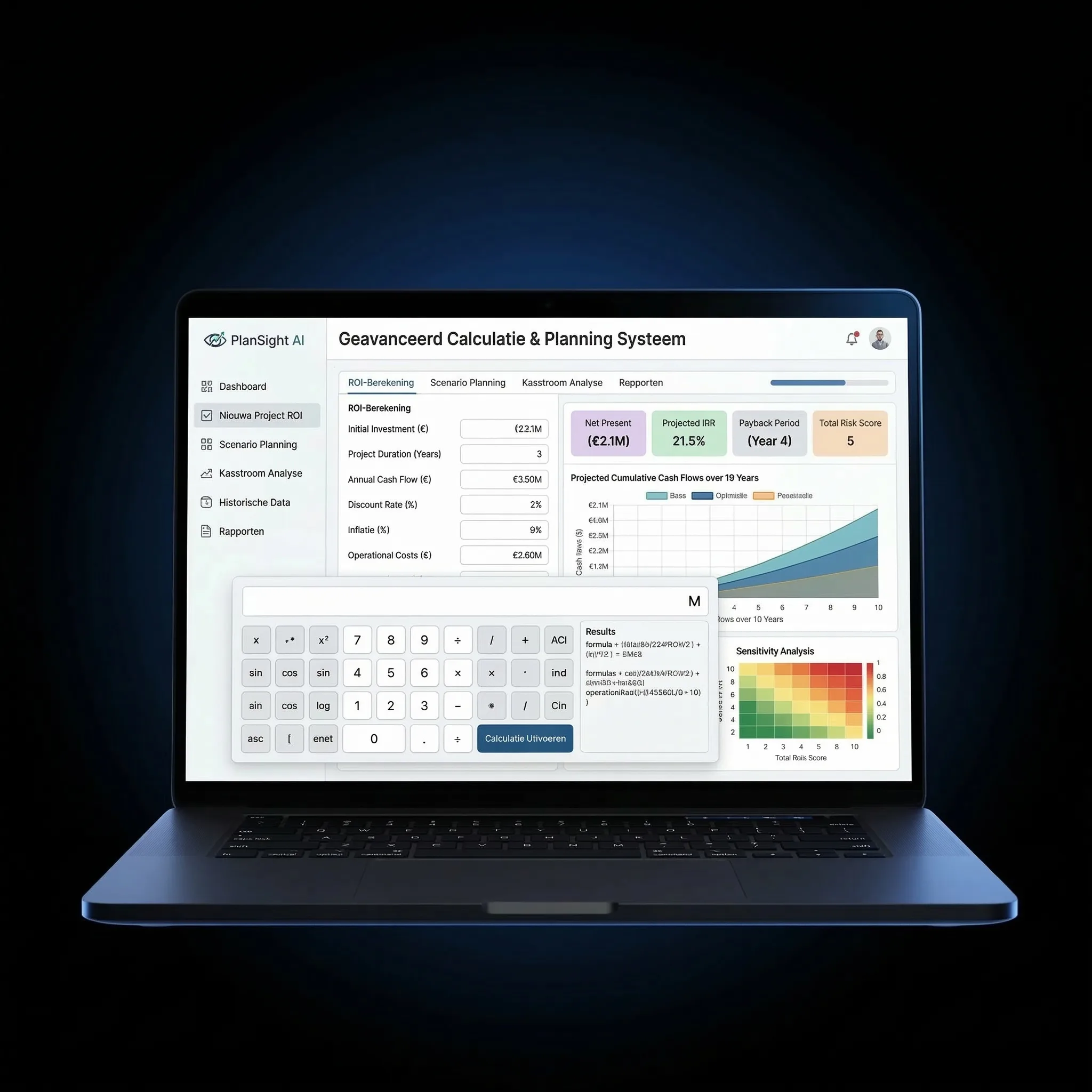
We deployed this exact Swarm Architecture to power Plansight AI, a product built specifically for structural steel estimation. The performance delta versus a human senior estimator is not an incremental improvement; it is a paradigm shift.
| Document Set | Senior Estimator | Swarm Architecture | Speed Multiplier |
|---|---|---|---|
| 100 pages | 4-6 hours | 48 seconds | ~300x faster |
| 500 pages | 20-33 hours | 3.8 minutes | ~400x faster |
| 1,000 pages | 40-67 hours | 7.2 minutes | ~500x faster |
Beware the Traps: Common Pitfalls in Construction AI
If you are a contractor looking to deploy AI estimating tools, watch out for these terminal flaws:
* Tolerating 80% Accuracy: In marketing copy, 85% accuracy sounds good. In construction estimation, an 85% accurate material count means you either lose the bid (overpriced) or you win the bid and go bankrupt (underpriced). A system like this must mathematically validate its own work to reach 99.5%+ accuracy before a human ever looks at it.
* The "Black Box" Estimate: If an AI tells you a project requires 14,000 kg of steel, but cannot show you exactly which lines on which pages it counted to arrive at that number, it is useless. The software must visually highlight every single detection so the human estimator can audit the work in seconds.
* Ignoring the Bill of Materials (BOM) Integration: An AI that counts doors is cute. An AI that counts doors, categorizes them by fire-rating, prices them against your local supplier's live database, and generates a formatted BOM ready for purchasing is transformative.
Take Action Today: Estimation Automation Checklist
Are you ready to stop tracing PDFs and start winning bids? Audit your estimation pipeline:
- [ ] Track the True Time: Force your estimating team to log their exact hours on the next three bids. Separate the time spent "counting and measuring" from the time spent "strategizing the bid."
- [ ] Calculate the Win/Loss Ratio: How many bids did you lose last quarter simply because you couldn't turn the numbers around fast enough to beat a competitor? Assign a lost-revenue Euro amount to that speed deficit.
- [ ] Standardize Your Inputs: Do your clients send you clean, vectorized PDFs directly from CAD software, or are they sending you distorted, scanned paper copies? AI models perform exponentially better on clean, digital-native documents.
- [ ] Audit Your Pricing Logic: Write down exactly how you build your margin. For example: "Material Cost + 15% wastage + Labor Hours at €65/hr + 12% profit margin." This exact logic must be coded into the final AI output.
- [ ] Define the Human Oversight: The AI should do 99% of the manual labor, but the senior estimator must always review the final summary. Define exactly what the "Final Audit Protocol" looks like in your firm.
Strategic Conclusion: Expertise Over Counting
The most expensive talent in your firm—your senior estimators—are currently functioning as highly-paid data entry clerks. By deploying Swarm Architecture to handle the brute-force mathematical extraction of construction documents, you fundamentally change the nature of their job.
They transform from counters to strategists. They spend their hours analyzing value-engineering opportunities, negotiating with suppliers, and optimizing the project schedule rather than squinting at a PDF to see if a line is 10mm or 12mm thick.
Stop counting. Start building.
Ready to process a 500-page bid in four minutes? Contact Root & Logic for a Plansight AI demonstration today.