
Beyond Single Prompts: The Engineering of Intelligent Systems
A single AI prompt is a parlor trick. A structured, multi-layered agent architecture is a professional-grade machine.
For the past two years, the business world has been captivated by the "chat interface"—typing a question into a box and marveling at the generated answer. But as organizations attempt to move beyond experimentation into scaling true enterprise-ready AI systems, they quickly realize that a basic chat interface cannot run a company.
The difference between consumer-facing AI tools and enterprise-grade business automation lies not in the underlying language models—it's in the architecture surrounding them.
The Core Problem: Why Simple Chatbots Fail in Enterprise Contexts (Problem Breakdown)
When a business attempts to automate a complex, multi-step process (like parsing a 500-page regulatory document or generating a highly specific quote based on 14 different variables), a simple "flat" AI implementation will almost always fail.
The failure doesn't happen because the AI "isn't smart enough." It happens because the system design is inadequate for the task. You are essentially asking a single worker to read the manual, analyze the data, formulate a strategy, write the report, and quality-check their own work—all simultaneously. In the real world, complex work is divided into specialized roles. In the realm of AI, we must do exactly the same.
The Root Causes of Flat Architecture Failures
Why exactly do simple AI integrations break down when exposed to real-world business complexity? The root causes are architectural:
1. Context Window Exhaustion
Large language models have finite "context windows" (the amount of text they can remember and process at one time). When processing a massive technical specification, a simple implementation must either truncate the document (losing critical data) or "chunk" it arbitrarily. When the AI loses the thread of the document, it starts guessing.
2. The Single Point of Failure
A flat AI architecture processes everything through a single decision pathway. If the model misinterprets step 2 of a 15-step process, that error cascades through every subsequent step. There is no supervisor to correct the mistake before the final output is generated.
3. Unverifiable Outputs and Hallucinations
When a single agent produces a result, there's no independent verification. This is the primary cause of AI "hallucinations" in business settings. You cannot trust a system that grades its own homework.
4. Linear Scaling Limitations
In a flat architecture, processing 10 documents takes 10 times longer than processing 1 document. This is inefficient and expensive. To achieve true scale, systems must be able to break tasks apart and process them in parallel.
Practical Solutions: The 4-Layer Agent Architecture
To solve these root causes, Root & Logic developed the 4-Layer Agent Architecture. This framework mirrors how highly effective human organizations operate: taking complex objectives, breaking them down, assigning specialized workers, and validating the output.
Layer 1: The Organizer (Data Ingestion & Triage)
Function: Document intake, parsing, and indexing.
The Organizer layer serves as the front desk and file room for all information flowing into the system. It doesn't analyze the meaning of the data; it simply structures it so the rest of the system can.
Technical Implementation:
Input: Raw document (any supported format, e.g., PDF, Word, Email)
Process:
  1. Format detection and text parsing
  2. Content extraction (separating text from tables and images)
  3. Structural analysis (building a hierarchy of sections)
  4. Metadata tagging (date, author, project ID)
  5. Index creation for rapid retrieval
Output: Highly structured, searchable document representation
Layer 2: The Main Orchestrator (Strategy)
Function: Task decomposition, resource allocation, and workflow management.
The Main Orchestrator acts as the "Manager." It receives high-level objectives from the user (e.g., "Extract all compliance risks from these 50 contracts") and translates them into actionable task sequences.
Orchestration Patterns:
| Pattern | Use Case | Example |
|---|---|---|
| Sequential | Dependent tasks | Data validation → Processing → Output formatting |
| Parallel | Independent tasks | Process pages 1-25 and 26-50 simultaneously |
| Conditional | Decision points | If an active risk is found → route to legal analysis sub-agent |
| Iterative | Refinement loops | Run drafting loops until the accuracy threshold is met |
Layer 3: Sub-Orchestrators (Specialist Management)
Function: Domain-specific workflow coordination.
For enterprise tasks, you need specialists. Sub-Orchestrators provide domain-specific intelligence. For example, in our construction AI automation platform, we use specialized sub-orchestrators:
- Structural Sub-Orchestrator: Only looks for steel, concrete, and timber specifications.
- MEP Sub-Orchestrator: Focuses entirely on mechanical, electrical, and plumbing symbols.
- Compliance Sub-Orchestrator: Checks all outputs against local building codes.
Layer 4: The Worker Swarm (Execution)
Function: Parallel execution of atomic tasks.
This is where the heavy lifting happens. The Worker Swarm takes the heavily structured, micro-tasks assigned by the Sub-Orchestrators and executes them simultaneously across hundreds of parallel AI instances.
Benchmarked Performance:
| Document Size | Sequential Processing | Layer 4 Worker Swarm | Speed Improvement |
|---|---|---|---|
| 100 pages | 47 minutes | 23 seconds | 122x |
| 500 pages | 3.9 hours | 1.8 minutes | 130x |
| 1,000 pages | 7.8 hours | 3.4 minutes | 137x |
The Validation Standard: Dual-Worker Verification
To completely eliminate hallucinations, the 4-Layer Architecture employs Dual-Worker Validation. Critical tasks are assigned to two separate workers who use different pathways or models to arrive at an answer. The Orchestrator only accepts the output if both workers independently arrive at the exact same conclusion.
Beware the Traps: Common Pitfalls in Multi-Agent Design
If you decide to build a multi-agent system internally, beware of these common engineering pitfalls:
* Over-Engineering the Swarm: Creating too many layers of agents that simply pass messages back and forth without executing actual logic. This burns through API tokens incredibly fast and introduces severe latency.
* Lack of State Management: If the Main Orchestrator forgets what task it assigned to Worker 47, the system will hang indefinitely. Robust database state management is required to track millions of micro-tasks.
* Ignoring the "Loop of Death": If an agent encounters an error it doesn't understand, it might attempt to fix it by calling itself continuously. Hard circuit breakers and maximum retry limits must be programmed into the orchestration layer.
Take Action Today: Your Architecture Diagnostics Checklist
If your current AI initiatives are failing to scale past the "cool demo" phase, use this checklist to audit your architecture:
- [ ] Audit Your Context Windows: Are you feeding massive, unformatted documents directly into a single prompt? If so, you are guaranteed to lose data.
- [ ] Check Your Validation Logic: Do you have an independent, programmatic way to verify the AI's output, or are you relying entirely on a human worker to "read it over and make sure it's right"?
- [ ] Map the Process Tree: Take your most complex manual process and map it into atomic micro-tasks. Can you isolate which tasks require domain expertise vs. simple data extraction?
- [ ] Measure Your Latency: If processing 10 documents takes 10 times longer than 1 document, your system is sequential. You need to re-architect for parallel swarm execution.
- [ ] Review Error Cascades: When your AI fails, does the whole system crash, or does the orchestrator catch the specific micro-error and re-assign it?
Strategic Conclusion: Build for the Enterprise
A single AI prompt is a toy. A hierarchical, 4-layer agent architecture is a highly reliable, professional machine.
To achieve the kind of operational efficiency that actually moves the needle on profit margins, you must move beyond the chat box. By structuring AI workers exactly how you would structure a highly efficient corporate department—with clear organizers, managers, specialists, and executors—you can create systems that handle unlimited volume with zero drop in quality.
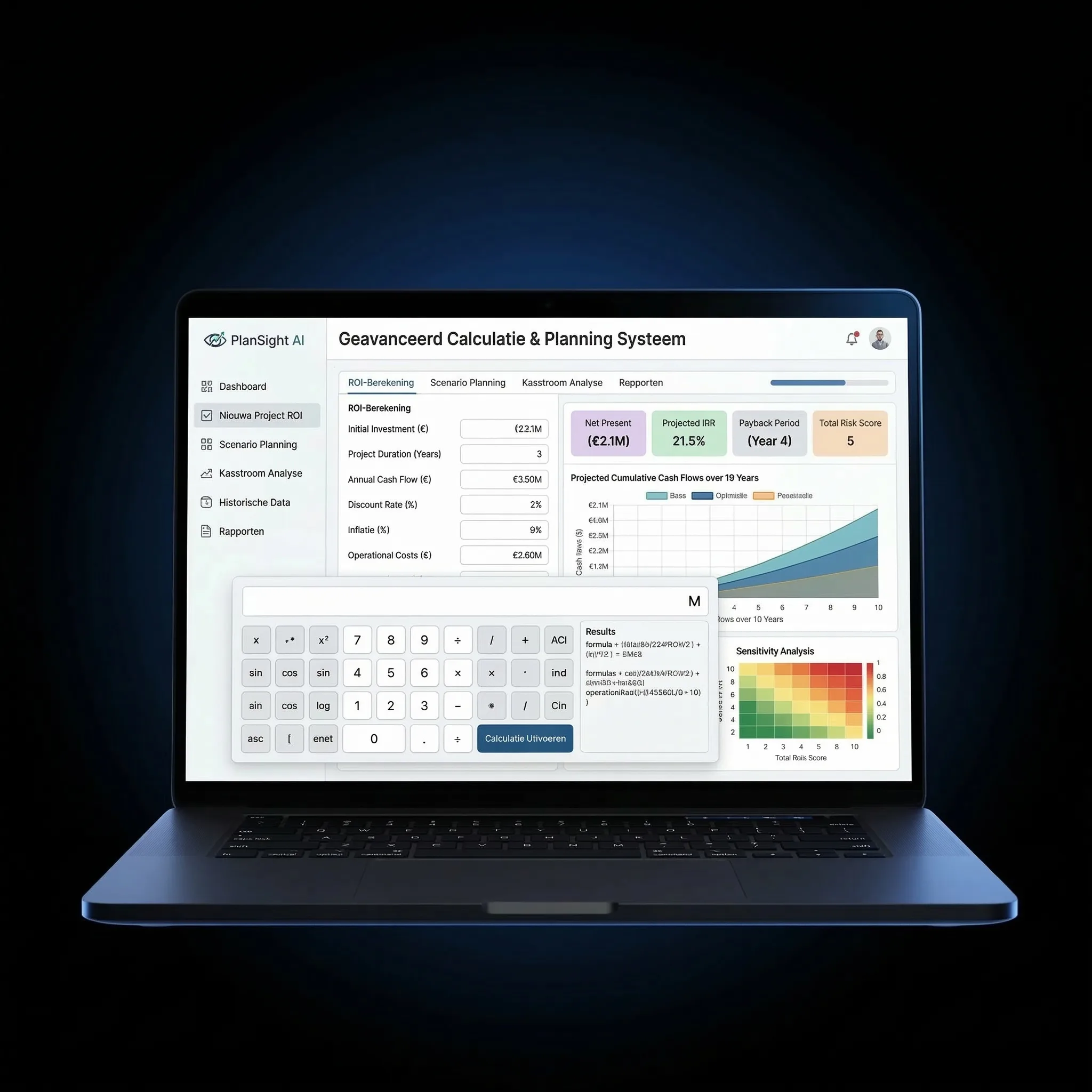
See how this exact architecture powers Plansight AI to reduce estimation times by over 99%.
Ready to upgrade your enterprise systems? Schedule a technical consultation with Root & Logic's engineering team today.