
The Death of the PDF Manual
Every organization has them: Standard Operating Procedures (SOPs) documented in dense Word files and 40-page PDFs. They are carefully written by management, dutifully filed on a company intranet, and almost never followed by the employees who actually do the work.
The problem isn't the procedures themselves—it's the format. Static documents cannot adapt to real-time situations, they cannot guide users interactively through complex decision points, and they certainly cannot enforce the completion of required steps. That is where conversational automation transforms the game entirely, turning passive rules into active engines.
Why SOPs Fail in the Real World (Problem Breakdown)
When a company relies on static documents to govern dynamic human behavior, failure is mathematically guaranteed.
When a new client needs to be onboarded, or a field technician encounters an irregular safety hazard, they do not stop to read a 15-page manual. They ask the person sitting next to them, or they simply guess. Over time, this "guessing" solidifies into tribal knowledge—undocumented, informal processes that deviate wildly from the official company standard.
The Financial Impact of Ignored SOPs:
- Inconsistent Client Experiences: If five different account managers onboard clients in five different ways, your brand delivery is fragmented.
- Compliance Fines and Legal Risk: In highly regulated industries, skipping a documented safety or financial check isn't just bad practice; it's a legal liability.
- The "Hero Culture" Bottleneck: When the official manual is ignored, the company becomes dependent on a few veteran employees who "know how things really work." When they leave, the operational capability leaves with them.
The Root Causes: Friction and Accessibility
Why do employees ignore the manuals management works so hard to create? The root causes are entirely related to friction.
1. The High Cost of Context Switching
If an employee is working in a CRM and needs to reference how to handle a specific edge-case exception, they must leave the CRM, log into the intranet, search for the correct document, read through irrelevant sections to find the right paragraph, and then translate those instructions back into the CRM. This context switching causes massive productivity bleed.
2. Static Answers for Dynamic Queries
An SOP might say "If the client's risk profile is high, escalate to a senior manager." But what exactly defines "high risk" in this specific scenario? A static document forces the employee to make a subjective judgment call.
3. No Enforcement Mechanism
A PDF cannot force you to read it before you act. There is no hard gate preventing an employee from skipping steps 3, 4, and 5 of a 10-step procedure if they are in a rush.
Practical Solutions: The Platform That's Already on Every Phone
To solve the friction problem, you must bring the process to where the employee (or client) already spends their time. You must turn the static document into an active conversational agent.
Why WhatsApp?
- Global Penetration: Over 2 billion active users worldwide.
- Astonishing Engagement: A 98% message open rate (compared to roughly 20% for enterprise email).
- Zero Friction: No app downloads, no new portals to learn, no passwords to reset.
From Document to Agent: The Transformation
Traditional Static SOP:
Client Intake Procedure V4.2
1. Collect the client's official legal name.
2. Verify identification documents against the regional database.
3. Record the primary billing address.
4. Determine the appropriate service tier based on transaction volume.
5. Generate the standardized engagement letter via the legal portal.
WhatsApp Agent Execution:
Agent: Hi Sarah, I see you are onboarding a new client.
       Let's get started. What's the official legal name of the business?

Sarah: Johnson & Partners LLC

Agent: Thanks! For immediate verification, please upload a
       photo of their business registration document.

Sarah: [uploads image directly in chat]

Agent: Perfect, the vision system has verified the registration.
       Based on their profile, which service package fits best?

       [Button: Standard Tier - Up to 50 transactions]
       [Button: Professional Tier - Up to 200 transactions]
       [Button: Enterprise Tier - Unlimited transactions]
The agent didn't just tell Sarah what to do; it walked her through the process, enforced the document collection before moving forward, and used a vision AI model to verify the document instantly.
Real-World Execution: [Project Sync-Core](/works/project-sync-core)
A professional services firm was struggling with their client intake process. Intakes were handled via chaotic email chains, taking an average of 4.7 days to complete, with 40% of submissions missing critical information.
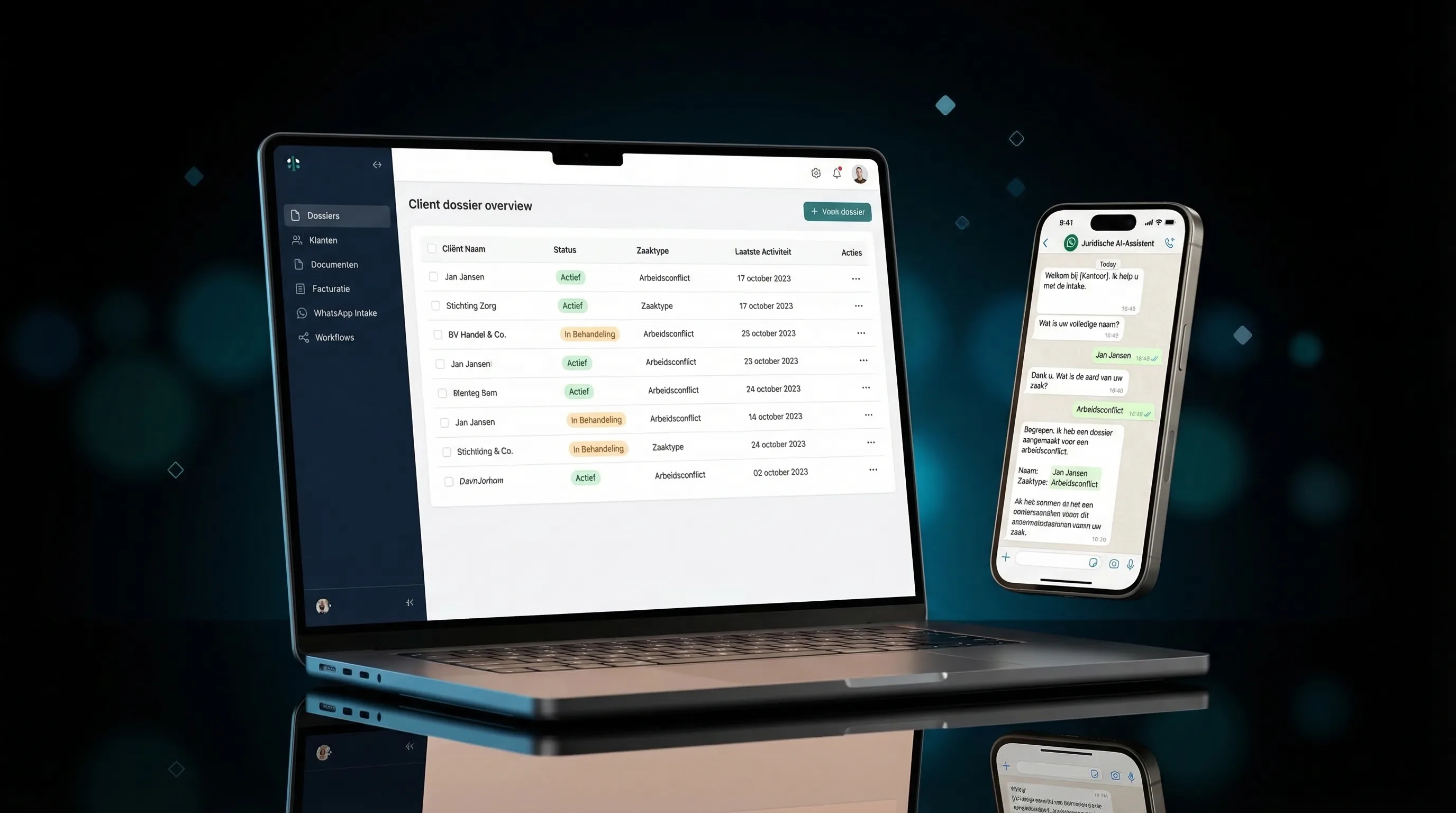
We replaced the PDF manuals and email forms with a sovereign WhatsApp intake agent linked to their ERP.
| Metric | Before Agent | After Agent | Change |
|---|---|---|---|
| Avg. Intake Completion | 4.7 days | 23 minutes | -99.7% |
| Incomplete Submissions | 40% | 0% | Eliminated |
| Staff Hours on Intake | 180 hours/month | 9 hours/month | -95% |
Beware the Traps: Common Pitfalls in Chatbot Deployment
If conversational automation is so powerful, why are so many customer service chatbots universally hated? Because companies fall into these architectural traps:
* Deploying "Decision Tree" Bots as AI: Many "AI" bots on WhatsApp are just glorified phone menus (Press 1 for Sales, Press 2 for Support). A true agent must utilize Natural Language Understanding (NLU) to engage in dynamic, unstructured conversation.
* Failing to Integrate with Backend Systems: If your WhatsApp bot collects information but then just emails a transcript to a human to do data entry, you haven't automated anything—you've just changed the input method. The agent must have write-access to your CRM or ERP to complete the task autonomously.
* The "Dead End" Protocol: When the AI encounters a scenario it cannot handle, it must gracefully hand off the conversation to a human operator, passing along the full transcript so the human doesn't have to ask the user to repeat themselves.
Take Action Today: Your SOP Automation Checklist
Ready to turn your dusty manuals into execution engines? Start here:
- [ ] Identify the "Most Violated" SOP: Which standard operating procedure causes the most downstream errors because people fail to follow the steps in order? This is your ideal first candidate.
- [ ] Map the Data Destinations: When the SOP is executed manually, where does the data ultimately go? (CRM, Google Sheets, a legacy database?)
- [ ] Define the Media Requirements: Does the process require the user to submit photos, signatures, or location pins? (WhatsApp handles all of these natively).
- [ ] Draft the Conversational Flow: Take the SOP and rewrite it as a script between a rigorous manager and a new employee. This becomes the foundation for your agent's system prompt.
- [ ] Assess Security Requirements: If the data being collected is highly sensitive, ensure you are utilizing the official WhatsApp Business API with end-to-end encryption, and routing data strictly into a sovereign business operating system.
Strategic Conclusion: Make Doing the Right Thing the Easiest Thing
The goal of management is not to write better instruction manuals. The goal is to ensure work is executed flawlessly, every single time.
By embedding your operational logic directly into the chat platforms your employees and clients already use, you eliminate the friction of compliance. You stop hoping people will remember the process, and you start guaranteeing it. Your SOPs shouldn't be documents gathering dust—they should be invisible colleagues executing 24/7.
Ready to transform your processes? Contact Root & Logic to discuss your automation priorities.